US mandatory health declaration applies to all air travelers until December 18
Since November 3, 2026, everyone flying to the United States must sign a health declaration saying they were not in DR Congo in the past 21 days.
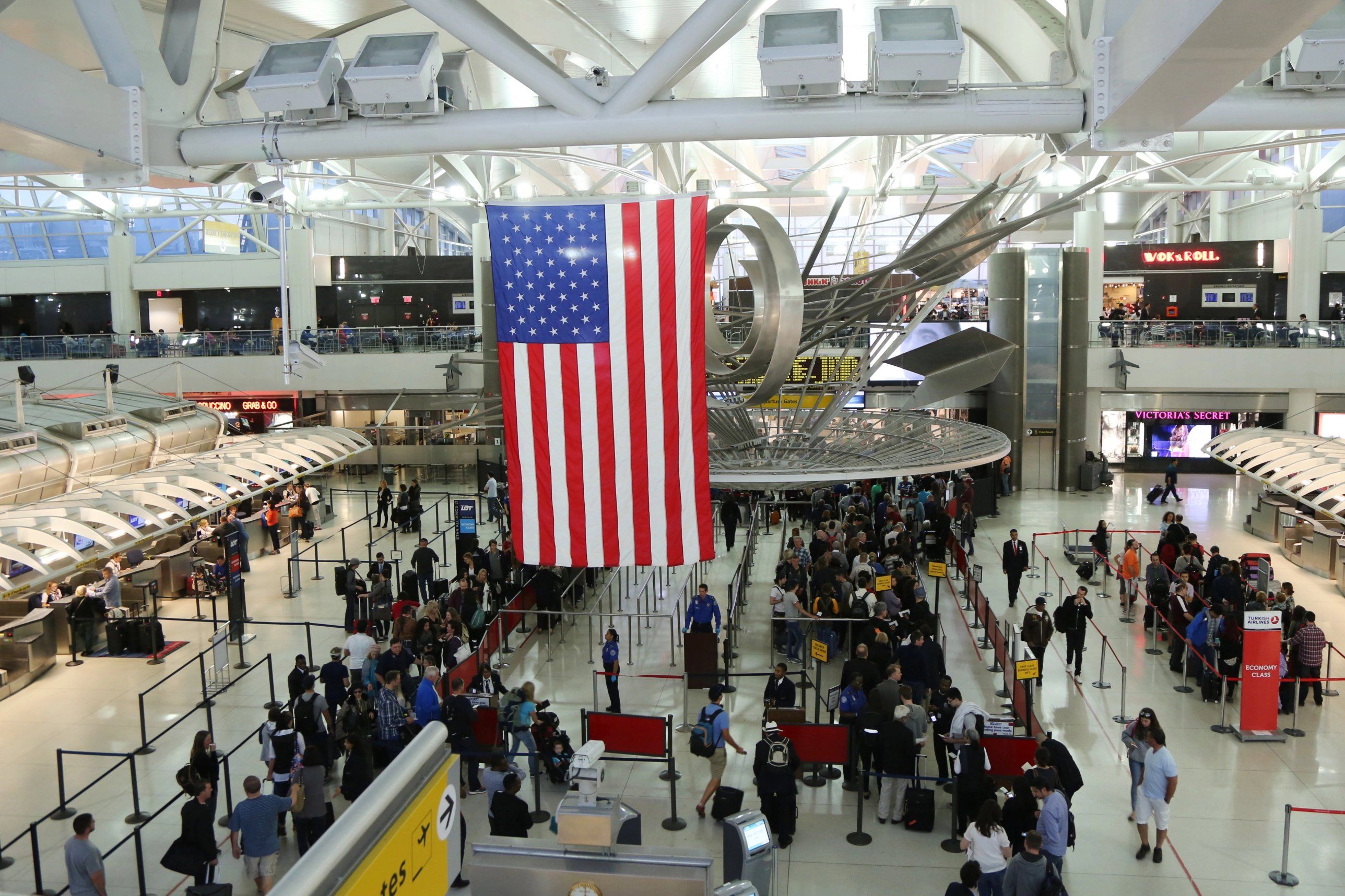
Everyone flying to the United States must now sign a health declaration before boarding. The requirement took effect at 11:59 p.m. Eastern time on November 3, 2026, under an order from the Centers for Disease Control and Prevention (CDC) published in the Federal Register. It is a response to an Ebola outbreak in the Democratic Republic of the Congo (DRC), and it is set to run through December 18, 2026.
What the US health declaration asks
One thing: that the traveler has not been physically present in the DRC during the 21 days before boarding a flight to the United States.
The order, which calls the declaration an attestation, defines presence broadly:
- Entering the DRC by air, land or sea counts.
- Connecting through a DRC airport counts, even without leaving the airport.
- Flying over the country without landing does not count.
No test result, vaccination record or other medical paper is needed, Forbes reported on November 16, 2026, citing CDC guidance.
Who has to sign it?
Every person on an aircraft heading to the United States from another country. The order applies to “any person” who is not exempt, and it lists:
- passengers of any nationality, which includes US citizens
- flight crew, including crew traveling as passengers to take up duty
- people on commercial, cargo and private aircraft
- travelers who only connect through a US airport on the way to a third country
Children are covered too. A parent or guardian can complete the declaration for anyone under 18, and a travel companion can do it for a person who cannot act for themselves.
Travelers who enter by land or sea, such as by car from Canada or Mexico or by cruise ship, are not covered, Forbes reported.
The exemptions are narrow: patients with Ebola moved under US government authorization, and people the CDC exempts for humanitarian or other government reasons, such as emergency medical evacuations.
How do travelers complete the health declaration?
Through the airline, not through the CDC. There is nothing to apply for in advance.
The order allows paper or digital declarations, including electronic signatures, and encourages airlines to build the step into online check-in. In practice that can mean a checkbox during check-in, a form at the counter or a question at the gate, according to Forbes. The CDC offers a form in English, Spanish and French, but travelers do not have to download or print it.
Airlines must check that each declaration is complete and signed, refuse boarding to anyone without one, and keep a copy for at least 42 days.
What if a traveler has been in the DRC?
They cannot board a flight to the United States until the 21 days have passed. That applies to US citizens and permanent residents as well, Forbes reported.
The order counts calendar days. The day a person leaves the DRC is day 0, and they may board on day 22.
For example, a hypothetical traveler who leaves Kinshasa on November 20, 2026 could board a flight to the United States on December 12, 2026 at the earliest.
A false declaration is a legal risk. The order says knowingly false statements can be prosecuted under federal law, and that failing to provide the declaration can lead to delay, denied boarding or denial of future boarding.
When does the requirement end?
The order is effective for 45 days, through 11:59 p.m. Eastern time on December 18, 2026. It can be amended or withdrawn before then. It does not say whether it will be renewed.
It applies to flights that depart at or after the start time, so the date that matters is the departure of the flight to the United States.
Why the United States introduced it
The CDC signed the first version of the order on October 22, 2026 and amended it on October 28, 2026 to make clear that crew are covered.
The order cites the scale of the outbreak. As of October 18, 2026, the DRC had reported 9,455 confirmed cases and 4,561 deaths across eight provinces. Ebola’s incubation period is up to 21 days, during which an infected traveler may show no symptoms, and the CDC concluded that airport screening alone would not be enough.
The declaration sits on top of earlier measures. The order says it operates alongside an existing CDC order that suspends entry for certain people coming from affected countries.
Other countries also ask arriving travelers for health forms. See our report on Zambia’s online health declaration before arrival, and more stories under travel bans and advisories.
What we don’t know yet
- Whether it will be extended past December 18, 2026.
- How each airline collects it. The order leaves the method to carriers, so travelers should look for the question at online check-in and allow extra time at the airport.
- The CDC’s own traveler guidance. We could not open the CDC’s web page on the order. The practical details above that are not in the Federal Register text come from Forbes.