Cuba moves e-visa applications to a new portal after its old site went down
Travellers to Cuba now apply for an e-visa on a new portal, consular.cu, run by the foreign ministry. The old eVisaCuba site closed on 29 October 2026.
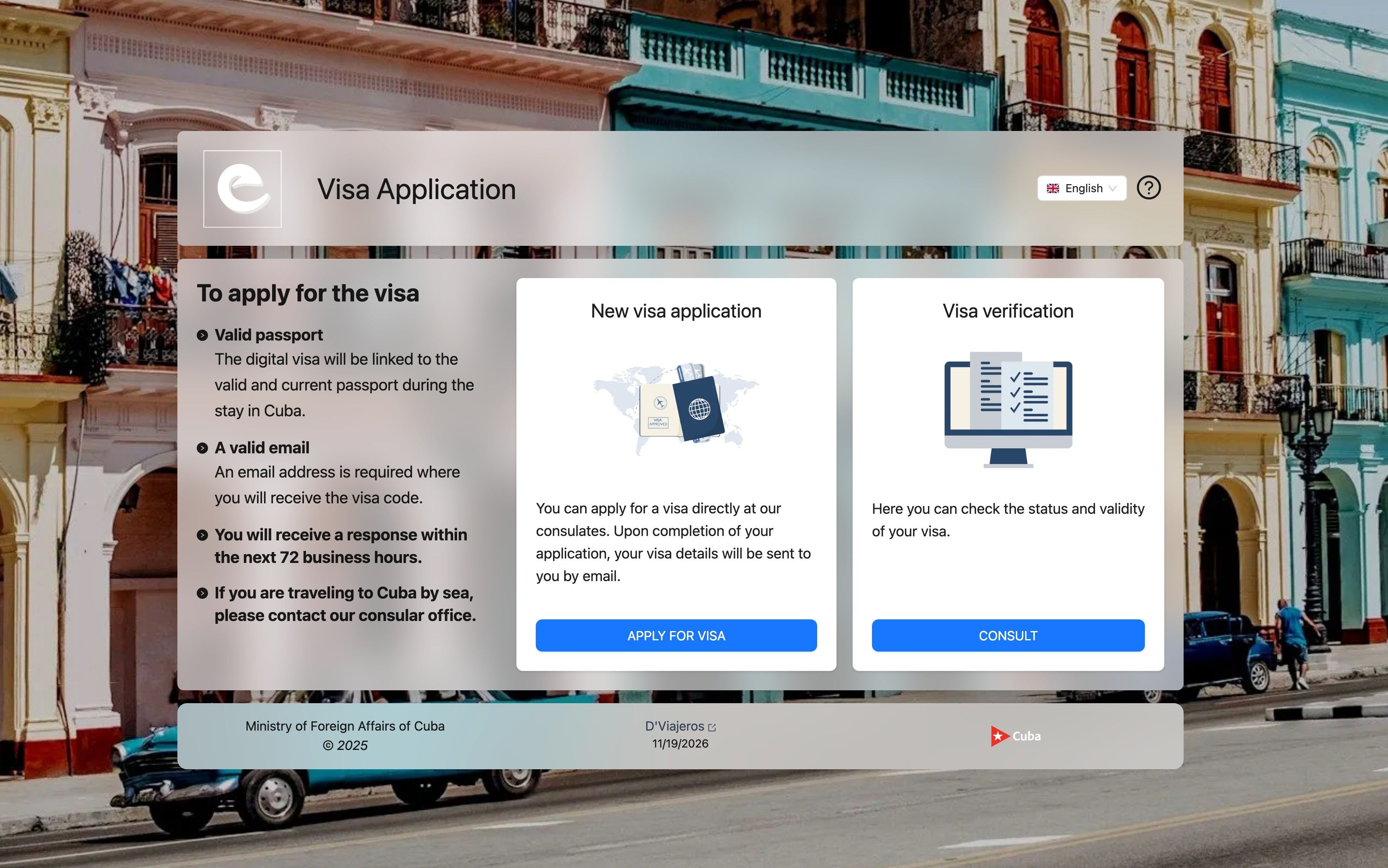
Cuba has moved its e-visa applications to a new portal. Travellers now apply at consular.cu, a site run by the Ministry of Foreign Affairs (the application page is at tramites.consular.cu), in place of the eVisaCuba site used since 2024.
The new portal opened on 4 November 2026, after the old one had been offline for almost a week.
Where do travellers apply for a Cuba e-visa now?
On the foreign ministry’s consular portal, consular.cu. Cuban consulates now point applicants there: the Consulate General in Madrid, for example, gives it as the link for online tourist visa applications.
The Cuba Tourist Board confirmed the change in a notice to the travel trade. “A new e-Visa portal is live” at that address, the Canadian trade publication TravelPress reported on 13 November 2026.
The board’s director, Gihana Galindo, said the updated platforms were meant to simplify the steps before departure.
The e-visa can still be obtained in two other ways, according to the board: through an authorised travel agency, or through a Cuban consulate.
What happened to the old eVisaCuba site?
It was taken offline on 29 October 2026 for a system migration. Cuban consulates in Spain told applicants that the online visa service would be unavailable from 29 October to 2 November 2026.
It did not come back as planned. The news site CiberCuba reported that evisacuba.cu was still not loading in mid-November 2026.
What is new on the portal?
Three things, according to the news site CiberCuba and a visa news site that examined the portal when it opened:
- Three visa categories: the tourist visa, plus a family visa for visiting relatives in Cuba and a business exploration visa. CiberCuba reported that the old site offered only the tourist visa.
- Group applications: one application can cover up to 10 travellers, CiberCuba reported.
- Consulate-led handling: the applicant chooses a country and a consulate, and that consulate sets the fee and how it is paid, the visa news site reported.
The family visa is for foreigners without Cuban citizenship, such as a spouse or child holding another country’s passport, CiberCuba reported.
How do applicants pay, and how much?
By bank transfer or deposit, not by card. CiberCuba reported that card payment is not available online: applicants make a transfer or deposit to the consulate, then upload the receipt.
The fee depends on the consulate. Cuba’s consulates in Spain list about $33 (€30) for a tourist visa issued to an individual, in fee tables in force since 1 October 2026.
For example, a couple applying through a Spanish consulate would pay about $66 (€60), send the transfer, upload the receipt and then wait for the consulate to process the file.
How long does the Cuba e-visa take?
Allow at least a week. The Cuba Tourist Board recommends applying at least seven days before the travel date.
The portal’s application page, at tramites.consular.cu, says applicants “will receive a response within the next 72 business hours”. Because the bank transfer has to arrive first, the whole process can take longer than that.
The same page lists what is needed to apply: a valid passport, to which the digital visa is linked, and an email address, where the visa code is sent. Travellers arriving by sea are told to contact a consular office.
What does the e-visa allow?
The visa itself has not changed. According to the Cuba Tourist Board:
- it is for tourism and allows one entry within one year of issue
- a new e-visa is needed for each trip
- visitors can stay up to 90 days, and can ask an immigration office in Cuba to extend that to a maximum of 180 days
What else do travellers to Cuba need?
Two things besides the visa, the board says:
- The D’Viajeros form. Every traveller must complete this digital declaration in the seven days before arrival and show the QR code it produces.
- Health insurance. Proof of valid cover is mandatory.
Some travellers do not apply for the e-visa themselves. The Cuban embassy in Canada says that for flights from Canada on Canadian airlines, the tourist visa is included in the ticket. VisaSpy’s visa checker shows the requirement for each passport.
What we don’t know yet
- Whether evisacuba.cu will return, or has been retired.
- A single fee list. Fees and payment methods differ from one consulate to another.
- How applications that were in progress on the old site are being handled.
Sources
- Visa application (consular portal)Official
- Consular services (Embassy of Cuba in Canada)Official
- Consulate General of Cuba in MadridOfficial
- Cuba launches new E-Visa portal to streamline visitor process (13 November 2026)
- German press: The regime has launched a visa portal with a "family visa" to visit Cuba, but without credit card payment and with a wait of up to six days (19 November 2026)